Labor Day Explained
Much about the American Labor movement has changed dramatically in the past 100 years. But some of the more unsavory aspects of labor remain exactly the same as they were a century ago.
Many listeners might be young enough, that mentioning Labor Day, means little more than another day off, in early September. But to a few weathered aviators, this national holiday, is a reminder that our industry, is one of the most regulated in the nation. Where there’s a highly regulated profession like aviation, a union is often nearby.
So let this Labor Day be the one, where you finally learn how unions fit into our industry, long before, you come face to face with a union shop. I’ll also share some of my own union experiences, near the end of the episode.
Labor Day was first celebrated in New York City in 1892, to honor the social and economic achievements, of the American worker. A few years later in 1894, President Grover Cleveland, signed a law, proclaiming the first Monday in September, of each year as Labor Day.
The late 1800s in America, were the height of the Industrial Revolution. It was a time when tens of millions of Americans, worked in steel mills, coal mines and the meat packing industry, to name just a few. This was when brands like Colgate, Armor, Standard Oil, Quaker Oats, General Electric and US Steel were created.
Along with these brands, the entrepreneurs who created them, became household names … like John D. Rockefeller, Andrew Carnegie, Cornelius Vanderbilt and J.P. Morgan. Later in the mid-20th Century, airlines like United, Delta, American, Continental, Pan Am, Eastern, Midway, Braniff and US Air, left their marks on air transportation.
Labor in the late 19th Century had a dark side too. No story of American labor would be complete, without a mention of the robber barons, a derogatory critique, comparing corporate titans, to medieval German lords ("robber barons") who unjustly taxed travelers, crossing their land.
Certainly, some of these tycoons were celebrated, for the innovation they brought to the American manufacturing world, with methods of making cheap goods and services available to millions. These men also donated, vast amounts of money, to build libraries, universities and museums.
But this small group of powerful American industrialists, financiers, and railroad tycoons amassed immense personal wealth by building monopolies and exploiting their workers. CEOs back then took home 10 or 20 times more cash annually than their employees.
During the height of the Industrial Revolution in the late 19th century, the average working stiff, labored through 12-hour days, seven days a week, often in dangerous factories, mills, and mines, and usually for very little pay. So little money did the average worker make, that even their young children, were often forced to work in those same factories, in dangerous conditions. Labor unions grew popular and organized strikes and rallies, to demand better pay, safer working conditions, and shorter work weeks.
Not surprisingly, these demands conflicted directly with the corporations, trying to create goods and services, at the cheapest possible cost, a trend that continued into the 21st Century.
Unions used the only leverage they had to spur negotiations … they withheld the labor of their members through strikes.
One of the most famous in the late 19th century, was the Pullman Railroad strike of 1894, led by the American Railway Union. The boycott severely damaged the rail industry, across the US, and positively shifted the power balance toward the unions.
Pullman rail car tycoon, George M. Pullman of Chicago, refused to negotiate with his workers, most of whom were already working 16-hour days. He fired thousands of them, and imposed a 25% wage cut on the rest, exacerbating an economic depression, that had begun the year before.
Some of the picket lines, became so violent with pro and anti-union arguments, that President Cleveland, dispatched 8,000 federal troops, to control the situation. On July 7, 1894 national guardsmen, after reportedly having been assaulted, fired into a mob, killing between 4 and 30 people and wounding many others.
The result was that the Pullman strike, transformed Labor Day, into the national holiday we know today.
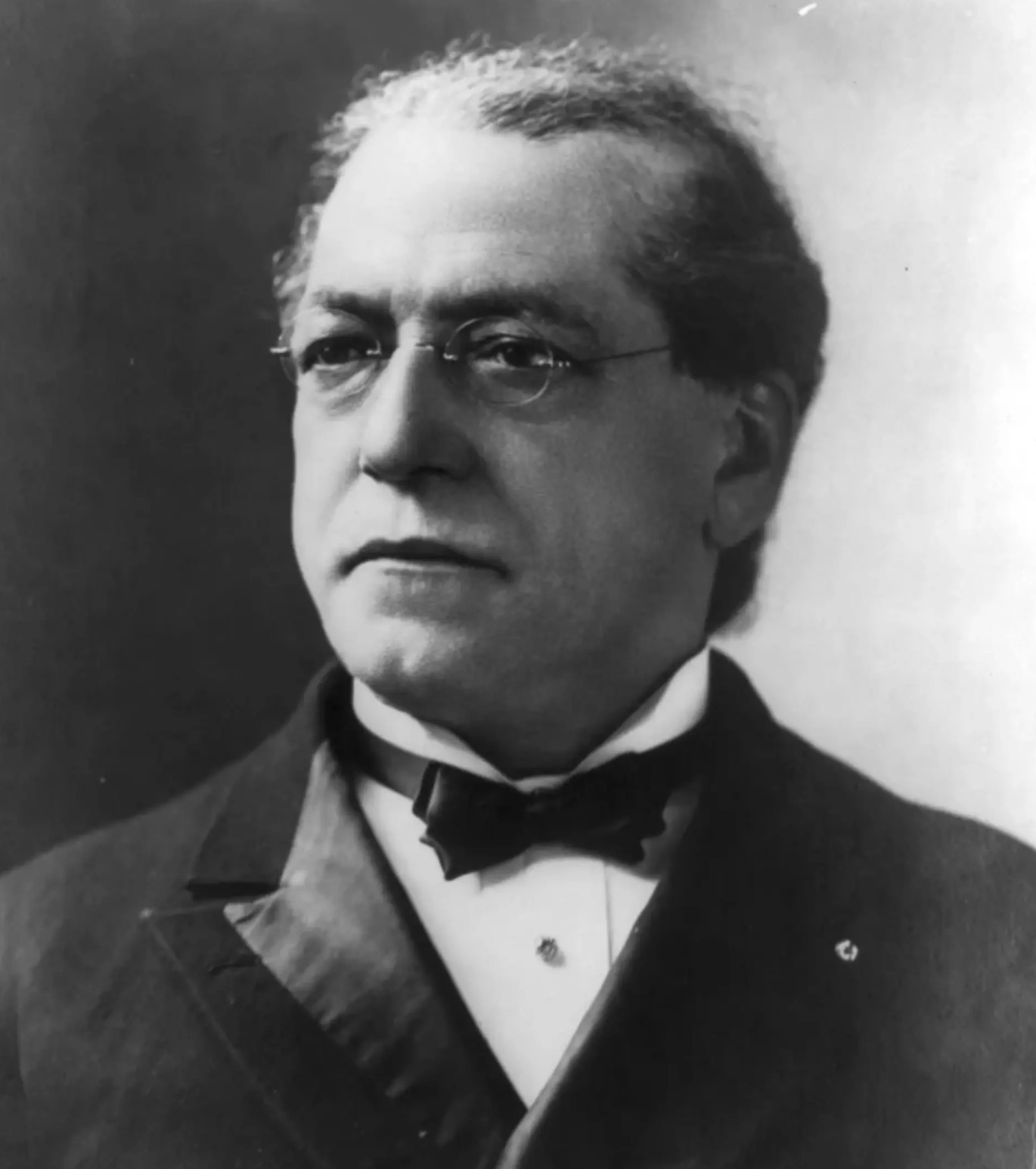 The US labor movement produced men, like Samuel Gompers and Eugene V. Debs, as well as organizations, like the American Federation of Labor, the Congress of Industrial Organizations and the International Workers of the World. Gompers was founder and president of the AFL, the most famous of the labor unions, and is credited with successfully negotiating wage increases, for its members and enhancing workplace safety for all workers. At its pinnacle, the AFL had approximately 1.4 million members.
For two decades however, the AFL and the CIO, were bitter rivals for leadership, of the U.S. labor movement. They eventually formed an alliance, in the increasingly conservative, anti-labor climate of the post WWII era, and in 1955, they merged under the leadership of George Meany. AFL-CIO membership reached 17 million in the late 1970s but declined in the 1980s. The U.S. manufacturing sector shrank, as jobs moved overseas taking advantage of cheaper labor.
The vast majority of jobs in the airline world today, remain union jobs, whether you’re a pilot, a flight attendant or a maintenance technician. Most positions in business aviation, however, are non-union.
A majority of US airlines pilots, are members of the Air Line Pilots Association, ALPA. Southwest Airlines’ pilots belong to the Southwest Pilots Association, while the Allied Pilots Association remains the bargaining agent for American Airlines pilots.
Most flight attendants are members of the Association of Flight Attendants (AFA), the Transport Workers Union, the International Brotherhood of Teamsters, or the International Association of Machinists and Aerospace Workers. Aircraft mechanics are represented, by some of the same unions as the flight attendants, in addition to the Aircraft Mechanics Fraternal Association.
The gap between CEO pay and that of their average employee has expanded astronomically, from the early days of labor. Today, the average CEO makes, between 200 and 300 times more money, than their average employee.
Let’s return to the present and I'll tell you about my own roles with labor unions.
My dad was a union plasterer in Chicago. My grandfather was an early president of the Chicago local of the Amalgamated Meat Cutters Union, in the early 1920s, when the stockyards here were still in their heyday. If you’ve ever read Upton Sinclair’s novel about the meat packing industry, “The Jungle”, Sinclair actually mentions my grandfather, “Big John Kikulski.”
The Jungle is the quintessential novel, that takes readers inside the blood, guts and 16-hour workdays, of the mostly Polish immigrant labor, who helped make the meat packing industry a success. This book literally explains how the sausage was made.
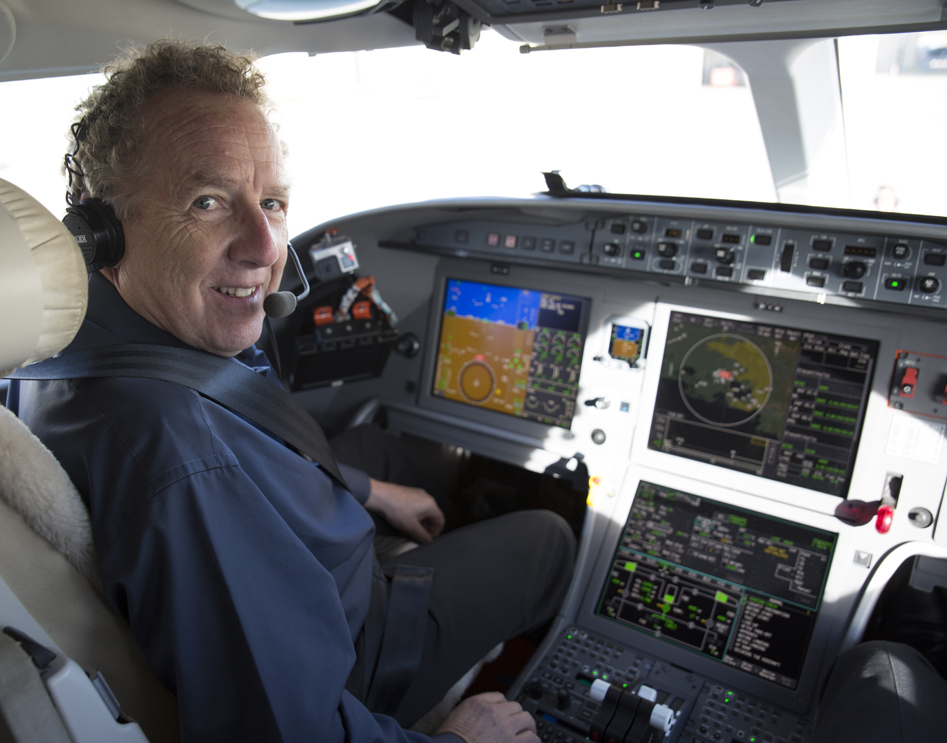
Despite my heritage, I didn’t start out interested in unions or even terribly impressed by them, until the early 1970s when I accepted my first real, post-military job as an air traffic controller with the FAA. The agency didn’t require controllers to join the union, but most controllers joined anyway. About a year into the job, I realized being part of the solution organized by a majority of controllers, was better than being a part of the problem.
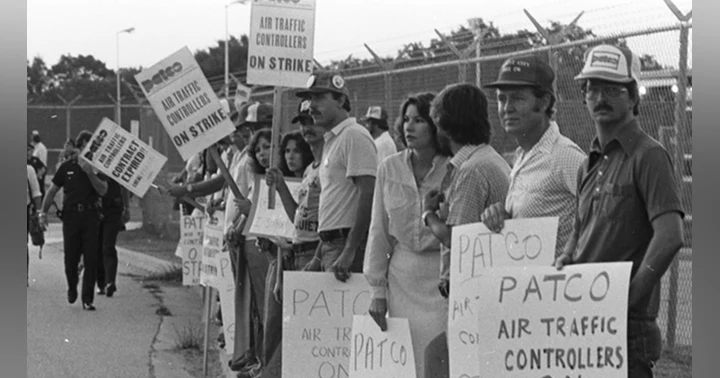
I joined the Professional Air Traffic Controllers Organization, PATCO, the infamous controllers union, long before the strike of 1981. I was later elected president of the local at Palwaukee Airport, now Chicago Executive Airport just north of ORD.
I learned quickly that being a union rep, created an engaging opportunity, to work closely with management, to discuss working conditions and scheduling issues, without fear of reprisal. FAA management couldn’t retaliate against a union member, because of provisions in our contract.
Also, if another controller was called on the carpet for a problem – and we often were – that employee could ask that a union rep, be present during the discussion. This ensured the story of what happened, and who said what, wouldn’t change after all parties, left the tower chief’s office.
Prior to PATCO becoming the bargaining agent, any of us put our careers at risk, if we took issue with a supervisor’s demands. At the time, most controllers, like me joined FAA after a hitch in the military. And of course, in the military, you were taught never to question orders, so FAA culture developed around ex-military supervisors, who still expected workers, to simply do what they were told, unquestioningly. FAA management spent an inordinate amount of time yelling and bullying employees, when controllers resisted, a problem that didn’t end when PATCO did.
I think having a union, helped bring balance to any disagreement – such as scheduling or safety issues - which is what unions were designed to do, in the first place; create a balance of power between labor and management. 
As federal employees, air traffic controllers took an oath, to never strike against their employer. That changed in August of 1981, when PATCO called the first ever strike ever, against the agency, citing too much traffic and too few controllers as the problem. Some people will tell you that a strike is only illegal if you lose. Unfortunately, in 1981, PATCO lost … big time. Some 14,000 controllers lost their jobs, and PATCO was quickly decertified.
The current controllers union, the National Air Traffic Controllers Association, appeared in 1986, just five years after the PATCO strike, because the problems that created the 1981 strike, still existed. For more about air traffic control since the PATCO strike, give a listen to episode #11 of Stories about Flying, “45 Years after the PATCO Strike.”
I eventually left the FAA to fly airplanes. My next union adventure began as a pilot member of the Air Line Pilots Association, when I flew for Midway Airlines in the late 1980s. Because I’d always found interaction between labor and management fascinating, I volunteered for the Secretary/Treasurer role at the airline. It allowed me to watch some of the eye-opening contract bargaining sessions. and day-to-day squabble resolution, that demonstrated why, to this day, the airlines remain one of the most unionized industries in America.
I’ll acknowledge that many people under the age of 50, might have a strong distaste in their mouth, when anyone mentions the word union these days, because the grew up in a time, when unions were in decline.
Unfortunately, the labor issues that spurred the rise in union membership – low wages and poor working conditions – didn’t disappear in the 21st Century. People in the C-suite of large companies, still don’t appreciate worker demands, getting in the way of how they run their companies, even if workers themselves, or the quality of the products they help produce, are suffering.
For an eye-opening look at that topic, watch the Netflix documentary, “Freefall: A Reckoning for Boeing.” You’ll hear frightening tales of product quality decline, and worker betrayal, by one of America’s most famous companies.
Looking back more than a hundred years at why Sam Gompers formed the AFL, unions existed to make worker’s lives better, which should in turn make a company more successful. And they usually did. But c-suiters don’t see it that way. CEOs by nature are a greedy lot.
I remember the first time I heard the phrase “maximize shareholder value,” in graduate school. I don’t have a problem rewarding the people who invested their dollars to create a company. I believe a rising tide lifts all boats. CEOs today however, believe their primary role is only to reward shareholders, with a never ending stream of dividends.
American workers are usually the last ones to see any financial payback, when a company’s bottom line improves. Bosses still believe that a dime spent on a worker is a dime wasted on the people who already make a good living.
Have you watched that Fisher Investment TV commercial? A potential client asks the advisor about their fees and the broker says. “Our fees are structured, so we do better, when our clients do better.” Imagine if every company rewarded it’s workers and shareholders that same way.
Admittedly, unions have shot themselves in the foot over the years, because they’ve been slow to change, during the information age. So slow, in fact, that American companies have sent thousands of jobs abroad, again, mostly to take advantage of cheaper foreign labor rates. It always comes down to money. And shareholders always come first. Employee rewards only seem to happen, when a company is somehow forced to share.
Today, workers remain on the front line of wage and job cuts, like when the airline industry was decimated, after 9/11. Did you know that United and Delta Airlines both handed their pension plans – and their associated financial obligations – off to the federal government in 2006, because those companies, couldn’t afford to fund those plans? They were sent to the federal Pension Benefit Guaranty Corporation, from which workers saw almost nothing in return, while C-suiters of course managed to grow their own wealth.
Unions have stumbled many times over the years. And a union is only as successful as that organization’s leadership, whether it’s on the local or national level.
But representation does function as a much needed buffer, between workers and management. Without them, the answer from management, is pretty much the same everywhere. “If you don’t like it, there’s the door.”
Every industry these days, is suffering from a critical shortage of skilled workers. That’s happening, because young people don’t trust big companies, to help them thrive, if they devote their lives to that organization.
The younger generation are watching their parents and friends struggle, with never-ending price increases, that hit them at the food store and the gas station, stagnant pay checks, and all while today’s big companies and their tycoons – including the administration and Congress – rake in billions.
Young people want and deserve, a better balance between their work life and their personal life, benefits a union once helped provide.
If companies really want to entice more of America’s young talent to join them, they’re going to have to bend more than they are today. That means a better sharing of the company’s success, with those employees.
I admit I do vacillate between being thankful for unions, while also wondering why they operate the way they do … or don’t. The unions sure weren’t any help to those Delta and United employees, when those companies spinelessly handed off their pensions, to the feds and the American taxpayer.
I’m not suggesting unions are the answer to every problem.
But I do believe having a say in how your job fits, into both your personal life and a company’s strategic plan, is better than having none at all. So, what’s your role going to be during your career?
It’s your life. You should have a say in how it’s run.
Are you listening Wall Street?