Being a Co-Pilot in the Early Days of the Airlines
https://player.captivate.fm/episode/01862540-1777-45b1-897c-6a2c8b620519/
This is Rob Mark, and welcome to Stories about Flying.
As the end of 2025, drew nearer, I realized I've been tangled up in the aviation industry for more than 60 years. Over those decades, I've come face to face, or maybe that should be ear to ear, with countless numbers of stories about every aspect of the industry. Now that I'm semi retired, I thought it was about time to start sharing some of those incredible tales.
So whether you're an aspiring pilot or someone interested in some other aspect of aviation, I think you're going to find these adventures worth hearing.
Episode One of Stories about Flying begins right now.
The Need for Pilots
Remember when the entire world seemed to be running short of pilots? You probably do because there have been at least a dozen shortages over my lifetime. Why? Because airline travel now is as common as was riding the train 50 or 60 years ago, for starters. To cope with a never ending demand for travel, airlines added thousands of additional airplanes. That's why, when it comes to jobs, most people still believe the only real job is flying for the airlines. Ask anyone in a college flight program. They'll tell you they all want to be airline pilots.
As I was going through my story files a few weeks ago, I stumbled across this airline memo from almost 100 years ago. It was created as a practical guide for new hire pilots at American Airways, predecessor of American Airlines. As I read and reread the memo a few times, it made me wonder how much worse pilot shortages over the past four or five decades might have been if the 100 year old culture the memo detailed still existed.
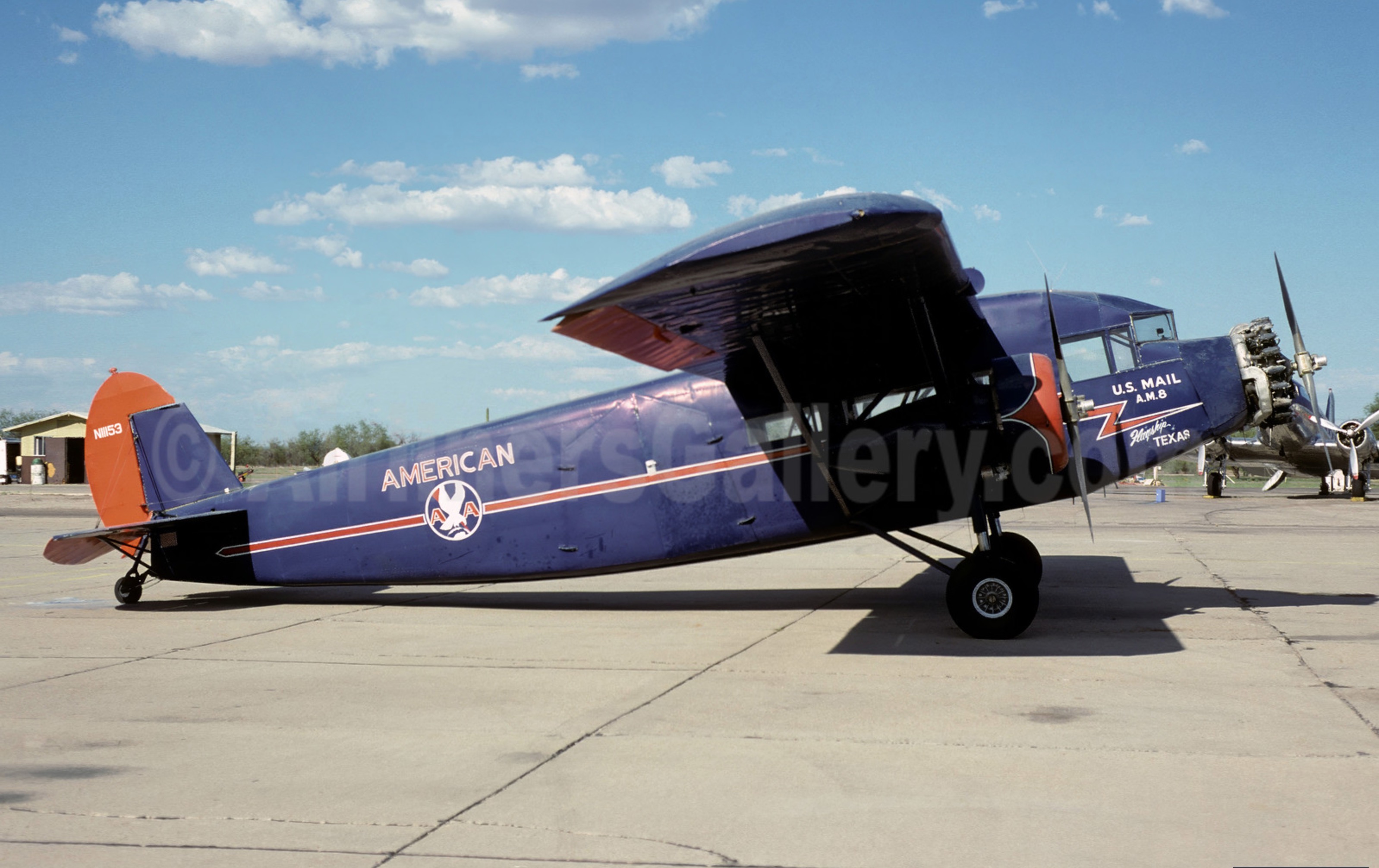
Before we get started with this story, you're going to need a bit of context. You'll hear a term tossed about that might be a bit confusing. Most people have never heard the term first pilot. In the early days of airline flying, there were no captains or first officers, just first pilots and copilots. More important than the titles of the men sitting in the cockpit was the behavior they were expected to display, subservient at all times. It would take many decades for this attitude to change.
As early airline management explained it, new pilots were there to learn about airline operations. That was best accomplished when new pilots sat quietly in the right seat, doing what they were told and otherwise keeping their mouths shut.
As airliners grew in size, cockpit crews grew in size as well to more than two pilots. Larger aircraft usually included a flight engineer to monitor the aircraft's health in flight, as well as a navigator and sometimes a radio operator.
The Arrival of CRM
The real change to flight operations, however, began in the late 1960s when Aviation Safety Specialists began listening closely to the cockpit voice recordings pulled from aircraft involved in accidents. They learned that captains sometimes made errors in their decisions. Not often, but certainly much more than what we experienced midway through the second decade of the 21st Century. Those lapses in judgment and the accidents that followed often cost hundreds of lives.
Accident investigators began to learn that often, before an accident, other crew members had questioned the captain's decisions. But in an era when other crew members had been raised to never question the boss's decision, their concerns often went unheeded. This cockpit evolution led to the creation of a philosophy that came to be known as Crew Resource Management, or CRM that focused on the value of gathering input from other pilots in the cockpit when the unexpected occurred.
A famous example of superb CRM was demonstrated in November 2010 in an accident that never happened aboard Qantas flight 32. That was an Airbus A380 flight between Singapore and Sydney, Australia. Four minutes after take off from Singapore, the A380s number two engine exploded, sending shrapnel ripping through the wing and the fuselage of the giant airliner, cutting thousands of wires that severely damaged the aircraft's vital flight control systems. The Airbus circled east of Singapore for two hours while the crew tried to deal with the thousands of failure messages the A380s computers were sending to the cockpit.
QF 32 commander that day, senior Qantas, Captain Richard de Crespigny was a guest on episode number 871, of the Airplane Geeks a few weeks ago. He told us there were so many failure messages being pumped into the cockpit that day that he took a lesson from the Apollo 13 incident to help create a solution to the dilemma. That day, there happened to be five pilots aboard Qantas flight 32 because the trip was also meant as a flight check to some members of the crew.
Using a technique called the Armstrong Spiral, named after Apollo 13 Commander Neil Armstrong. de Crespigny decided the best path to a safe landing back at Singapore was not to focus on what was broken aboard qf 32, but on only what was still working. Using CRM skills, de Crespigny pooled the collective knowledge of the other pilots to create a plan that allowed for the safe landing of Qantas Flight, 32 without the loss of any of the 469 people aboard. Before he finished his story de Crespigny mentioned one more hazard the super jet had in store for the crew that day before they landed at Singapore. Because of the numerous computer failures aboard the Airbus, the crew was unable to calculate accurate landing reference speeds. Almost as a final challenge to the crew, all the way down final approach, the A380 displayed hazard messages that alternated between a stall and an overspeed alert.
Now I think it's time to get back to that American Airways, new pilot memo
Dateline, October 25 1930. To All Copilots.
Every man in an organization has a certain part to play and a duty to perform. The first pilot has been delegated the responsibility of flying the ship. The service crew keeps the ship in safe flying condition. The traffic department supplies the passengers, and the operations department orders the ships in and out. Yet, even with all this division of authority into the above named competent departments, there are still many chores that are left undone.
For this reason and none other, there has been created in the industry the demand for the copilot. There are now 14 copilots in the southern division of American Airways, Inc, whose flying time ranges from 400 to 2500, hours. Regardless of how much flying time a copilot has it's necessary that all copilots be regarded alike by their superiors.
Copilots, your job is to do many things other employees won't do. Your immediate supervisor is the first pilot. His wants are your orders. He is the King. You are his faithful and alert servant. Remember, you're on probation always. Your working hours are from now on. Your pay is small, your advancement is uncertain, and there are already thousands of other first pilot aspirants striving to get your job for even less money and more work.
You're not employed because of your flying ability and your employment is not ever assured. You may never have the chance to run your own ship as first pilot. The pilot with whom you now have the privilege of flying with largely controls your destiny. If you handle the many details assigned, many of which are unpleasant, and if you prove yourself to be of value to him and others, you may have the privilege of remaining as a copilot until some years to come, at which time, you will have learned much from your associations and flying experience with him. You'll have won for yourself recognition by the company and all as a gentleman and as an experienced copilot worthy of promotion.
Remember, you are not employed to do the flying, not only because you're not considered capable, but because far better pilots, the finest in the world, have already been employed for that work. If you are ever permitted to take the controls at any time, you may consider this a special favor on the part of the first pilot.
A copilot who has done his job well, makes very little noise and listens attentively to his superiors will, in time, demand and receive recognition for his services as a copilot. This is something worth working for, and it can be attained. But first you must earn it. As long as you do your work well, conduct yourself strictly as a copilot, this company will regard you as one important department of the organization.
You will be asked to do many personal favors for the older pilots. But always keep in mind that these same older pilots are at the same time going to be in a position to do many and greater favors for you. So if you have an excess of pride, swallow it. If you have personal faults, overcome them. Always make a neat and pleasant impression on your passengers and upon those with whom you serve. You will find many very good friends among those with whom you're working.
Trusting that you are successful in your enterprise of becoming a good copilot.
Sincerely Yours,
Jerry Marshall, Operations Manager, American Airways.